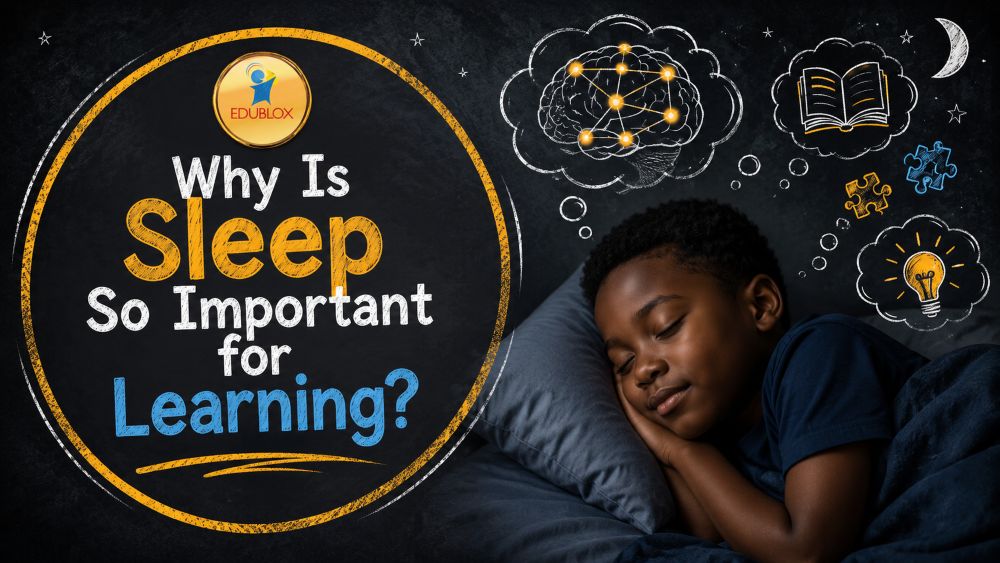
Have you ever stayed up late studying for a test, only to discover the next morning that you couldn’t remember half of what you learned? It might seem as though sleeping wastes valuable study time, but the opposite is true. Sleep is one of the most important parts of the learning process.
When you’re awake, your brain collects new information all day long. Every lesson, conversation, experience and fact leaves its mark. But simply learning something doesn’t mean it has been stored permanently. That’s where sleep comes in.
Your brain doesn’t switch off
Many people think the brain rests while we sleep. In reality, it’s incredibly busy. While you’re asleep, your brain sorts through the day’s experiences, deciding what to keep, what to strengthen and what to discard. It’s a bit like tidying a busy office at the end of the day, filing away important information while throwing out the clutter.
Without enough sleep, that process becomes less efficient. New information isn’t organised as effectively, making it harder to remember what you’ve learned the next day.
Sleep helps turn learning into memory
Imagine trying to save a document on your computer. If you switch the computer off before clicking “Save,” your work may be lost.
Learning works in much the same way. During the day, your brain gathers new information, but simply learning something doesn’t guarantee that you’ll remember it tomorrow. Sleep is when much of that new information is organised and strengthened, helping to convert short-term learning into long-term memory.
That’s why a good night’s sleep after studying is often more valuable than another hour spent staring at your notes.
Sleep helps you solve problems
Have you ever gone to bed puzzled by a maths problem, only to find that it suddenly made sense the next morning? You’re not imagining it.
During sleep, the brain continues to process information, sometimes making connections that weren’t obvious during the day. That’s one reason why people often wake up with a fresh perspective on a difficult problem.
What happens if you don’t get enough sleep?
Even one poor night’s sleep can make it harder to concentrate, pay attention, remember information and make good decisions. Over time, a lack of sleep can affect learning, mood and overall performance at school or work.
That’s why sleep isn’t a luxury—it’s an essential part of keeping your brain working at its best.
How much sleep do we need?
The amount of sleep we need changes throughout life, but children and teenagers generally need far more sleep than adults because their brains are still developing.
Most school-age children need around 9 to 12 hours of sleep each night, while teenagers usually need 8 to 10 hours. Adults typically function best on 7 to 9 hours, although individual needs vary.
The take-home message
If you want to learn more effectively, don’t just think about what happens while you’re studying. Think about what happens afterwards.
Every good night’s sleep gives your brain another opportunity to organise, strengthen and store what you’ve learned. So the next time you’re tempted to stay up late cramming for a test, remember this: sometimes the smartest thing you can do is turn off the light and go to sleep.